






UKUK

Contact Info

  • ADDRESS: Street, City, Country

  • PHONE: +(123) 456 789

  • E-MAIL: your-email@mail.com

Month: July 2026

Latest UK

Inconsistencies Between Reported Symptoms and Records.

In medico-legal practice, inconsistencies are rarely as simple as either party may suggest. A claimant may describe severe pain, yet the GP records are sparse. They may report travel anxiety, although early records mention only physical symptoms. They may say symptoms began immediately after an accident, while the first documented complaint appears weeks later.

Latest UK

Distinguishing Accident-Related Symptoms from Pre-Existing Conditions and Natural Degeneration.

Defendants do not escape liability because a claimant was already vulnerable. Equally, claimants do not recover damages for symptoms that would have occurred in any event.
This tension sits at the centre of many personal injury disputes involving pre-existing conditions and natural degeneration. A claimant may have experienced intermittent neck pain before a road traffic accident but remained fully active. Imaging may have shown degenerative spinal changes without active symptoms. After the accident, pain may increase, function may reduce and treatment may escalate, the defendant may argue that the problem was already present. The claimant may also argue that the accident changed everything. The task of the expert is to identify what the evidence supports.

Latest UK

Whiplash: The Injury That Remains Difficult to Measure.

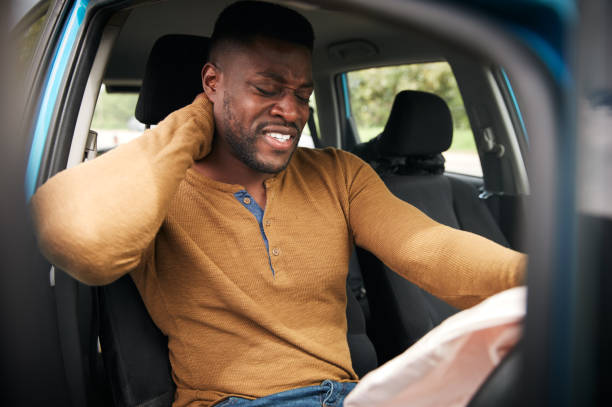
Few injuries attract as much scrutiny in the personal injury sector as whiplash. It is one of the most frequently reported consequences of road traffic collisions, yet it remains one of the most debated. The reason is straightforward: whiplash is a genuine clinical condition, but it is often difficult to verify through objective testing.

Uncategorized

The Medico-Legal Problem with Normal Imaging and Persistent Pain.

There is a familiar moment in medico-legal cases when the papers appear to pull in opposite directions. The claimant describes pain that has continued for months, sometimes years, and says it affects work, sleep, travel, lifting, concentration, and ordinary domestic life. The imaging is then reviewed and appears unremarkable. No fracture. No nerve compression. No structural abnormality that neatly accounts for the level of pain being reported.

Latest UK

Fraud, Exaggeration and the Growing Pressure on Medico-Legal Experts.

Fraud attracts headlines. Exaggeration wins cases.
That uncomfortable reality sits at the heart of modern personal injury litigation, where insurers warn of dishonest claims, claimant representatives argue for fair compensation and expert witnesses are increasingly asked to distinguish genuine injury from overstatement.
The problem is that the line between fraud and exaggeration is rarely clear.

Latest Latest SA UK

When the Symptoms Do Not Match the Records: Why Consistency Matters in Personal Injury Claims.

Most personal injury claims are not won or lost because an accident happened. They are won or lost because of what the evidence says happened afterwards.
That is where claims begin to weaken.
A claimant reports severe pain, ongoing restriction and a recovery period that extends well beyond the expected range. Yet the medical records tell a less certain story. There may be limited GP attendance. Physiotherapy notes may record improvement earlier than the claimant now describes. Employment records may show a return to work. The claimant’s account during a medico-legal examination may not sit comfortably with the documents created at the time.

AU Latest Latest Latest Latest SA UK US

The Hidden Psychological Cost of Whiplash.

The public image of whiplash is remarkably narrow. Mention the injury and most people think of neck pain, stiffness, physiotherapy and a compensation claim. Even within the medico-legal sector, discussion often centres on physical symptoms, recovery periods and the valuation of soft tissue injuries.
Yet many of the most significant consequences of whiplash are not physical at all.

AU Latest Latest Latest Latest SA UK US

Why Mental Health Remains the Least Standardised Area of Medico-Legal Reporting.

Mental health is difficult to standardise because psychological injury does not usually present in a neat or predictable way. A broken bone can be seen on an X-ray, a scar can be measured, and movement can be tested. Psychiatric injury is different. It is usually assessed through history, presentation, records, function and clinical judgement.
That does not make it less real or less important. It does mean it is harder to reduce to a standard format.

AU Latest Latest Latest Latest SA UK US

Rehabilitation and Return-to-Work Evidence.

Rehabilitation evidence is often treated as an add-on in personal injury claims. It should not be. In many cases, it is central to causation, prognosis, disability and loss.
A claimant may have sustained an injury, but the medico-legal question does not end there. The expert must consider what treatment was required, whether recovery was supported, whether rehabilitation was delayed, whether the claimant engaged with it, and whether return to work was realistic.

AU Latest Latest Latest Latest SA UK US

Expert Witness Standards: Independence Is No Longer a Formality.

The court does not need a hired opinion. It needs independent assistance. That distinction should sit at the centre of every medico-legal report. It is not enough for an expert to include the standard declaration at the end. The report itself must show that independence has shaped the work.
Expert evidence is under sharper scrutiny because it can influence settlement, valuation, liability arguments and trial strategy. A weak report can distort a case. A partisan report can mislead the court. A careless report can damage both the party relying on it and the expert who signed it.

About Us

Lorem ipsum dol consectetur adipiscing neque any adipiscing the ni consectetur the a any adipiscing.

Email Us: infouemail@gmail.com

Contact: +5-784-8894-678

Medico Legal  @2026. All Rights Reserved.